
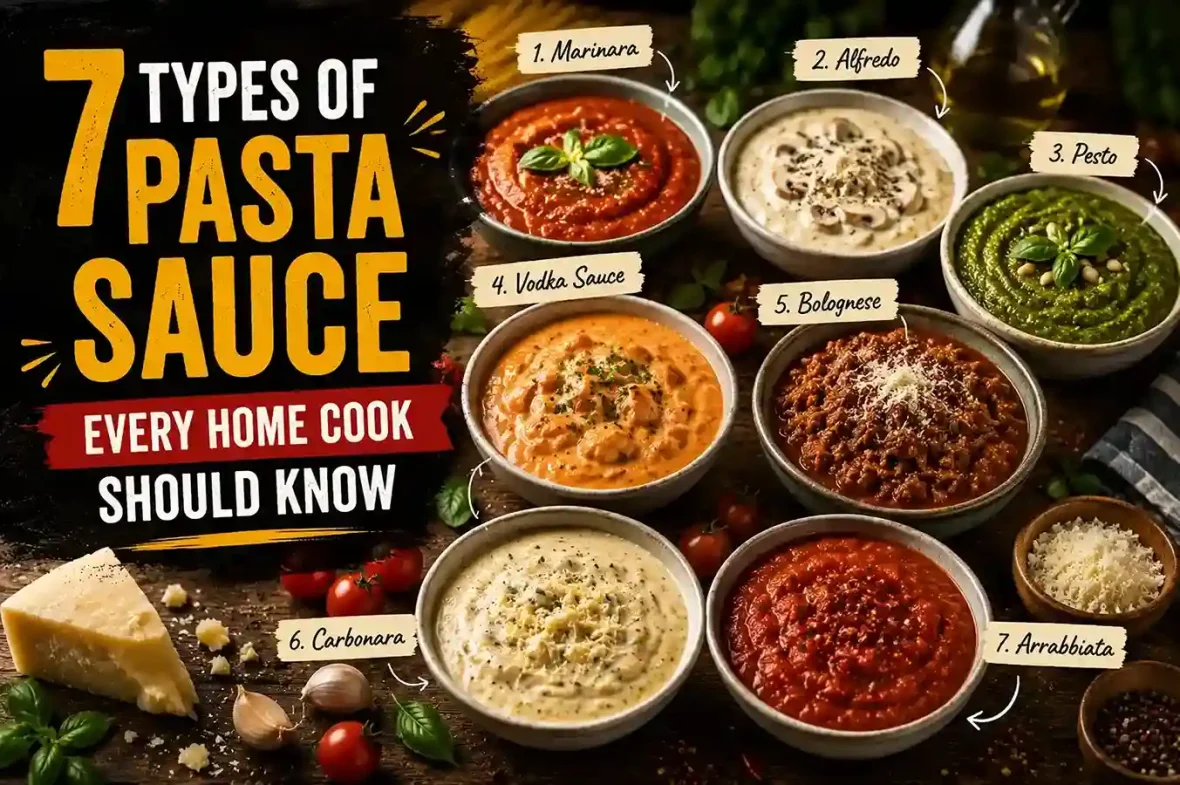
7 Types of Pasta Sauce Every Home Cook Should Know
Pull open any fridge in a pasta-loving household, and you’ll spot at least three jars of sauce fighting for shelf space. That’s because not every noodle shape or dinner mood calls for the same sauce. At allHungry, we get asked almost daily which pasta sauce pairs best with which dish, so we put together this guide to clear up the confusion once and for all.
Whether you’re hosting a Sunday dinner or just craving something quick after work, knowing your tasty pasta sauce options makes cooking easier and way more fun. Below, we break down the most popular pasta sauce types, what makes each one unique, and how to pick the right one for your next meal.
Why Knowing Your Pasta Sauce Types Actually Matters
Sauce isn’t just a topping. It’s the flavor backbone of the entire dish. A heavy cream sauce on delicate angel hair pasta can overwhelm it, while a thin marinara might get lost on thick pappardelle.
Understanding different types of pasta sauce helps you match texture, richness, and acidity to the right noodle. It also saves you money, since you stop buying random jars and start choosing sauces that fit your actual cooking habits.
Not Sure Which Sauce Fits Your Kitchen?
Browse every sauce style on allHungry and get the right jar delivered tonight. Shop Pasta Sauces on allHungry
Marinara: The Classic Everyone Trusts
Marinara is the sauce most people picture when they think of Italian cooking. It’s made from tomatoes, garlic, onions, and herbs like basil and oregano, simmered until the flavors blend.
This sauce is light, tangy, and cooks fast, usually in under 30 minutes. It works beautifully with spaghetti, penne, or as a dip for garlic bread and mozzarella sticks. Home cooks love marinara because it’s forgiving and hard to mess up.
Alfredo: Rich, Creamy, and Comforting
Alfredo sauce brings butter, heavy cream, and parmesan cheese together into a silky, rich coating. It clings well to wide noodles like fettuccine, letting every bite carry that creamy flavor.
Because Alfredo is heavier, it pairs best with simple proteins like grilled chicken or shrimp. Too many competing flavors can drown out its delicate, buttery taste. If you’re craving comfort food on a cold evening, this sauce delivers every time.
Pesto: Fresh, Herby, and Fast
Pesto skips the cooking altogether. It blends fresh basil, pine nuts, garlic, olive oil, and parmesan into a bright, aromatic sauce that’s ready in minutes.
This sauce shines on lighter pasta shapes like fusilli or bowtie, where its texture can grip the curves. Pesto also works well tossed with roasted vegetables or spread on sandwiches, making it one of the most versatile sauces in this list.
Bolognese: Hearty and Meat-Based
Bolognese is a slow-simmered meat sauce built from ground beef or pork, tomatoes, carrots, celery, and a splash of wine or milk. It takes longer to prepare than most sauces, often two hours or more, but the depth of flavor is worth the wait.
Thick noodles like tagliatelle or rigatoni hold up well against bolognese’s hearty texture. This sauce is a favorite for family dinners because it’s filling and satisfying on its own, no extra sides required.
Arrabbiata: For Spice Lovers
Arrabbiata starts with a marinara-style tomato base but adds crushed red pepper flakes for real heat. The name literally means “angry” in Italian, and one bite explains why.
This sauce pairs well with penne, since the tube shape traps the spicy sauce inside. If you enjoy bold, fiery flavors, arrabbiata is one of the more exciting types of pasta sauces to keep stocked in your pantry.
Vodka Sauce: A Creamy-Tomato Hybrid
Vodka sauce blends tomato sauce with cream and a small amount of vodka, which helps release flavors that oil and water alone can’t unlock. The result is a pink, velvety sauce that’s less heavy than Alfredo but richer than plain marinara.
Penne alla vodka is the most famous pairing, though it also works nicely with rigatoni. This sauce has become a modern favorite for its balance between creamy and tangy notes.
Aglio e Olio: Simple Garlic and Oil
Sometimes the simplest sauce wins. Aglio e olio uses just garlic, olive oil, red pepper flakes, and parsley, sautéed together until fragrant. There’s no tomato or cream involved at all.
This sauce lets the pasta itself shine, especially with spaghetti or linguine. It’s a great pick when you want something quick, light, and full of flavor without heavy ingredients weighing you down.
Found Your Favorite? Or Still Torn Between Two?
Order a few styles at once and taste-test your way to a new go-to. Build Your Pasta Night on allHungry
Choosing the Right Sauce for Your Next Meal
Picking the best pasta sauce comes down to three things: the pasta shape you’re using, how rich you want the meal to feel, and how much time you have to cook. Thin sauces suit delicate noodles, while thick, chunky sauces need sturdier pasta to match.
If you’re not sure where to start, the team at allHungry is always happy to walk you through options based on what’s in your kitchen. You can also browse our full sauce selection online and have everything delivered straight to your door, ready for tonight’s dinner.
Not sure which jar to grab first? Reach out to us, and we’ll help you build a pasta night that fits your taste and schedule perfectly.
Need Help Picking a Sauce?
Tell us what’s in your pantry, and we’ll help you pair it perfectly. Talk to the allHungry Team
Read More: Pizza Sauce vs Marinara Sauce: What is the Real Difference?
FAQs
What is the healthiest type of pasta sauce?
Tomato-based sauces like marinara and arrabbiata are lighter than cream-based options and carry antioxidants like lycopene. For a healthier, tasty pasta sauce, skip the heavy cream and stick to tomato or olive oil bases.
Can I mix different pasta sauces?
Yes, many cooks blend sauces to create new flavors, like adding cream to marinara for a vodka-style twist. Just avoid mixing very different bases, such as pesto and Alfredo, since the flavors can clash.
How long does homemade pasta sauce last in the fridge?
Tomato-based sauces stay fresh for four to five days in an airtight container. Cream-based sauces like Alfredo spoil faster, so use those within three days.
What’s the difference between marinara and regular tomato sauce?
Marinara is quicker to make, often just tomatoes, garlic, and herbs simmered briefly. Traditional tomato sauce simmers longer and develops a deeper, richer flavor.
Which pasta sauce works best for meal prep?
Bolognese and marinara reheat well without losing texture, making them great for make-ahead meals. Alfredo tends to separate when reheated, so it’s best made fresh. allHungry carries sauce bases that make batch cooking easy any night of the week.
Ready for Tonight’s Dinner?
Grab your sauce, pick your pasta shape, and let allHungry handle delivery. Order Now on allHungry
No Comment